Uttar Pradesh Police Mahila Samman Prakoshth · Programme case study
Vikalp: Digital reporting and police accountability for violence against women
Vikalp gave women in Uttar Pradesh a way to report violence online without first visiting a police station. Led by Sutapa Sanyal within the Mahila Samman Prakoshth, it connected digital access to named district officers, time-bound police reporting and a feedback loop controlled by the complainant.
Vikalp was the first web portal in India dedicated exclusively to registering and processing complaints about crimes against women.
- A complaint ID to track progress
- Action Taken Reports required within 24 hours
- Unsatisfactory responses kept open for follow-up
Programme figures as of 1 April 2017.
The challenge
Women experiencing violence may be unable or reluctant to go to a police station, especially when the perpetrator is a family member. Distance, stigma and fear of being blamed can also deter reporting. A safe alternative has value only when complaints reach an accountable officer and women can track what happens next.
The response
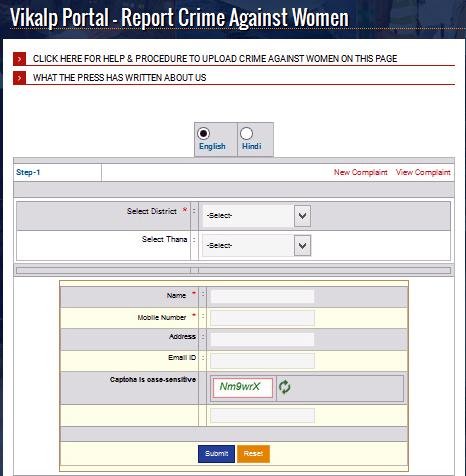
Vikalp was a dedicated online complaints portal accessible through the Uttar Pradesh Police website. Women, or others acting on their behalf, could submit a complaint from anywhere in the state. It was one of nine connected programmes run by the Mahila Samman Prakoshth.
A complaint was submitted online, with supporting material where relevant.
An SMS notified district supervisory officers and the Mahila Samman Prakoshth.
A unique complaint ID let the complainant follow progress.
Local police were required to upload an Action Taken Report within 24 hours.
The complainant could mark the police response SATISFIED or DISSATISFIED.
An unsatisfactory response kept the feedback loop open: the Prakoshth legally reviewed the case and followed up with the district Superintendent of Police and nodal officer. Calls to complainants helped check whether their concerns had been addressed.
Making the response accountable
A designated gazetted officer served as nodal officer in each of Uttar Pradesh’s 75 districts. The Mahila Samman Prakoshth monitored the portal daily, followed up on pending or unsatisfactory responses and contacted complainants. An e-cell at its office helped visitors submit complaints online. Outreach through community programmes and public information helped explain the alternative route.
Results at a glance
Of 4,318 complaints recorded by 1 April 2017, police action was recorded for 4,187, or 97%. The remaining 131 did not have action recorded in that snapshot. Rural areas accounted for 2,075 complaints (48%); urban areas for 2,243 (52%). These figures describe reach and recorded police activity, not outcomes for survivors.
The model combined digital access with an offline chain of responsibility: district officers, daily oversight and a channel for complainants to challenge an unsatisfactory response. This is a historical case study, not a link to a currently operating reporting service.